
7 Key Examples of Embryo Monitoring for IVF Success
- Feb 17
- 9 min read
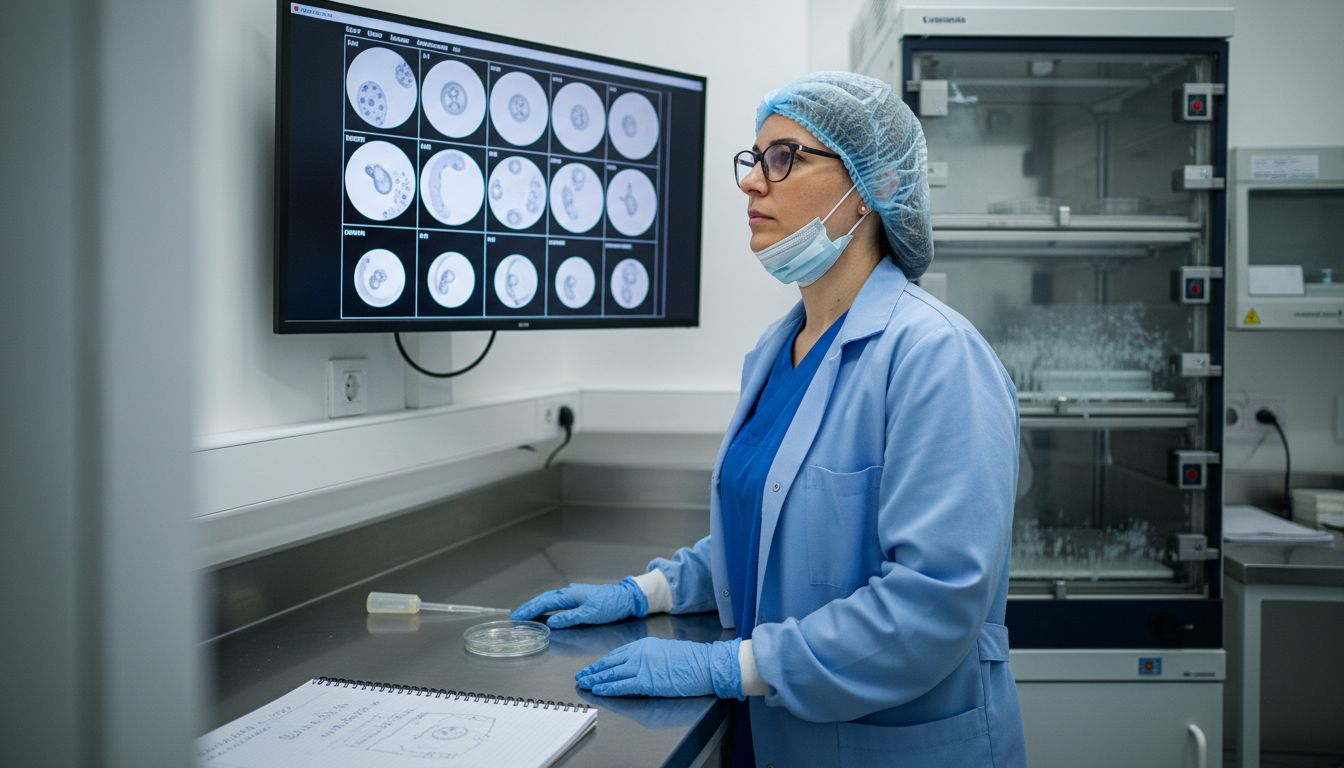
Choosing the right embryo during IVF can feel overwhelming when you want to maximize the chances of a healthy pregnancy. Traditional selection methods often rely on limited observations and subjective judgment, leaving you wishing for more certainty and clarity. The latest technologies and scientific breakthroughs now offer much deeper insights into embryo development and potential. This list will reveal proven approaches that can reduce subjectivity, enhance embryo quality assessment, and introduce objective tools using AI and genetic screening. Get ready to discover specific innovations that transform embryo monitoring, helping you make informed decisions about your IVF journey.
Table of Contents
Quick Summary
Takeaway | Explanation |
1. Time-Lapse Imaging Reduces Stress on Embryos | This method minimizes environmental disruption during embryo development, which is crucial for maintaining viability. |
2. AI Algorithms Provide Objective Embryo Assessment | Utilizing advanced AI enhances accuracy and reduces bias in selecting the most viable embryos for IVF. |
3. Morphokinetic Analysis Offers Precise Quality Predictions | By tracking developmental timing, this technique forecasts the implantation potential of embryos more reliably than traditional methods. |
4. Genetic Screening Identifies Abnormalities Before Implantation | This process helps prospective parents understand genetic health and mitigates risks of miscarriages by assessing embryos before transfer. |
5. Remote Monitoring Enhances Patient Engagement | Real-time updates about embryo development reduce anxiety and improve collaboration between patients and fertility specialists. |
1. Time-Lapse Imaging: How Continuous Observation Works
Time-lapse imaging represents a groundbreaking advancement in embryo monitoring during in vitro fertilization (IVF) procedures. This innovative technology allows fertility specialists to observe embryo development continuously without disrupting the delicate culture environment.
By utilizing specialized incubators equipped with high-resolution cameras, time-lapse imaging captures detailed morphokinetic profiles of embryos at precise intervals. These cameras document critical developmental milestones with unprecedented accuracy, enabling embryologists to track embryonic progression without repeated manual removals.
Key benefits of time-lapse imaging include:
Minimized environmental stress on developing embryos
Reduced subjective assessment by embryologists
Comprehensive documentation of cellular developmental stages
Enhanced predictive modeling for embryo quality
The technology works by creating a continuous video record of embryo growth, allowing specialists to:
Observe cellular division rates
Detect potential developmental anomalies
Identify optimal embryos for potential transfer
Time-lapse imaging provides unprecedented insight into embryonic development without disrupting the delicate culture environment.
Modern time-lapse systems can detect subtle morphological changes that traditional intermittent observation might miss. Precise developmental tracking becomes possible, offering a more nuanced understanding of embryo potential.
Pro tip: Ask your fertility specialist about time-lapse imaging options during your IVF consultation to understand how this advanced technology might improve your specific treatment approach.
2. AI Algorithms for Embryo Scoring and Selection
Artificial intelligence has revolutionized embryo selection by introducing unprecedented precision and objectivity to the complex process of identifying the most viable embryos for IVF treatments. These advanced algorithms leverage sophisticated machine learning techniques to analyze multiple developmental indicators with remarkable accuracy.
Deep learning models now enable embryologists to predict pregnancy outcomes with significantly enhanced reliability. By processing thousands of embryo images through convolutional neural networks, AI can detect subtle morphological characteristics that human experts might overlook.
Key advantages of AI embryo scoring include:
Objective assessment of embryo quality
Reduced human bias in selection process
Faster and more comprehensive analysis
Improved predictive accuracy for implantation potential
The technological process involves:
Capturing high-resolution embryo images
Applying machine learning algorithms
Analyzing multiple developmental parameters
Generating probabilistic implantation scores
AI algorithms can achieve up to 75% accuracy in predicting embryo viability compared to traditional manual assessments.
Modern AI systems integrate complex datasets including genetic markers, cellular morphology, and developmental timing to create comprehensive embryo profiles. These sophisticated approaches help fertility specialists make more informed selection decisions.
Pro tip: Ask your reproductive specialist about how AI-assisted embryo scoring might be incorporated into your specific IVF treatment plan to maximize potential success rates.
3. Morphokinetic Analysis for Predicting Embryo Quality
Morphokinetic analysis represents a sophisticated approach to evaluating embryo potential by examining the dynamic processes of cellular development during early stages of embryonic growth. This advanced technique goes far beyond traditional static morphological assessments by tracking precise timing and characteristics of embryonic division.
The process involves continuous monitoring of developmental milestones that provide crucial insights into an embryo’s reproductive potential. By analyzing the exact timing of key events such as cell division and blastocyst formation, specialists can predict implantation likelihood with remarkable accuracy.
Key aspects of morphokinetic analysis include:
Tracking precise cellular division intervals
Measuring time between key developmental stages
Identifying potential chromosomal abnormalities
Evaluating embryo developmental synchronicity
The technological process involves:
Capturing high-resolution time-lapse images
Measuring exact timings of cellular events
Comparing developmental markers against established models
Generating predictive embryo quality scores
Morphokinetic models can outperform traditional embryologist evaluations in ranking viable embryos for transfer.
Advanced algorithms like PREFER and LB models have demonstrated superior capabilities in identifying the most promising embryos for successful implantation. These sophisticated approaches transform embryo selection from a subjective process to a data-driven scientific assessment.
Pro tip: Discuss morphokinetic analysis options with your fertility specialist to understand how these advanced evaluation techniques might improve your individual IVF treatment strategy.
4. Embryoscope Technology for Enhanced Embryo Growth Tracking
Embryoscope technology represents a quantum leap in embryo monitoring during in vitro fertilization treatments. This advanced time-lapse imaging system provides unprecedented insights into embryo development by capturing continuous high-resolution images without disrupting the delicate cultivation environment.
By integrating sophisticated imaging technologies with precise environmental controls, EmbryoScope allows fertility specialists to observe embryo growth with minimal interference. The system maintains optimal incubation conditions while generating detailed morphological data that traditional methods cannot capture.
Key benefits of EmbryoScope technology include:
Continuous embryo monitoring without removal
Reduced physical handling and stress on embryos
High-resolution imaging at multiple focal planes
Enhanced embryo selection accuracy
The technological process involves:
Maintaining stable incubation environment
Capturing images at regular intervals
Generating comprehensive developmental records
Analyzing morphokinetic characteristics
EmbryoScope provides a game-changing approach to embryo evaluation by offering uninterrupted observation and precise developmental tracking.
Advanced AI-driven scoring enables more accurate predictions of embryo implantation potential by analyzing complex developmental patterns. This technology transforms embryo selection from a subjective process to a data-driven scientific assessment.
Pro tip: Discuss EmbryoScope monitoring options with your fertility specialist to understand how this advanced technology might optimize your individual IVF treatment strategy.
5. Genetic Screening Methods in Embryo Monitoring
Genetic screening represents a revolutionary approach to identifying potential chromosomal and genetic abnormalities in embryos before implantation. This advanced technique provides prospective parents with critical insights into their embryos genetic health and potential reproductive risks.
Preimplantation genetic testing (PGT) offers comprehensive genetic evaluation by analyzing embryos at the cellular level before transfer. By examining chromosomal structures and genetic markers, specialists can identify potential genetic disorders and improve IVF success rates.
Key aspects of genetic screening include:
Detection of chromosomal abnormalities
Identification of single-gene defects
Assessment of inherited disorder risks
Reduction of miscarriage potential
Enhanced embryo selection accuracy
The screening process involves:
Carefully extracting cellular samples
Performing advanced genetic analysis
Evaluating chromosomal integrity
Selecting highest-quality embryos
Genetic screening transforms embryo selection from a probabilistic approach to a precision-driven scientific assessment.
Advanced genomic technologies now enable more nuanced evaluations that go beyond traditional screening methods. These innovations can detect complex genetic variations and provide unprecedented insights into embryonic potential.
Pro tip: Consult with a genetic counselor to understand how comprehensive genetic screening might impact your specific fertility treatment strategy.
6. Non-Invasive Assessment with Metabolite Analysis
Non-invasive metabolite analysis represents a groundbreaking approach to assessing embryo quality without disturbing the delicate developmental environment. This advanced technique allows fertility specialists to evaluate embryo potential by analyzing chemical markers in the culture media.
Modern metabolomics provides insights into embryo viability through sophisticated biochemical profiling. By measuring specific metabolites such as glucose, lactate, and amino acids, specialists can gain unprecedented understanding of an embryo’s metabolic health and implantation potential.
Key benefits of metabolite analysis include:
Zero physical disruption to embryos
Comprehensive metabolic profiling
Early prediction of developmental potential
Reduced invasive testing requirements
Enhanced embryo selection accuracy
The technological process involves:
Collecting embryo culture media samples
Performing advanced mass spectrometry
Analyzing metabolite concentrations
Generating predictive pregnancy indicators
Metabolite analysis transforms embryo assessment from visual observation to precise biochemical evaluation.
Advanced AI algorithms now interpret complex metabolic data to generate Metabolite Pregnancy Indexes with remarkable accuracy. These sophisticated models can predict implantation potential with up to 85% clinical validation success.
Pro tip: Discuss metabolite analysis options with your fertility specialist to understand how this cutting-edge technology might provide additional insights into your specific fertility treatment strategy.
7. Remote Embryo Monitoring Platforms for Patient Updates
Remote embryo monitoring platforms represent a revolutionary approach to patient engagement and fertility treatment transparency. These advanced digital solutions enable prospective parents to stay connected with their IVF journey through real-time updates and comprehensive tracking technologies.
Wearable and IoT technologies now provide unprecedented access to detailed reproductive health information. Patients can receive instant notifications about embryo development stages, reducing anxiety and creating a more collaborative treatment experience.
Key features of remote monitoring platforms include:
Real-time embryo development updates
Secure digital communication channels
Personalized progress tracking
Reduced patient stress and uncertainty
Enhanced clinic-patient collaboration
The technological process involves:
Integrating clinic monitoring systems
Creating patient-specific digital dashboards
Generating automated status notifications
Ensuring data privacy and security
Remote monitoring transforms patient experience from passive recipients to active participants in their fertility journey.
Advanced digital communication tools enable patients to receive detailed insights about their embryo development without constant in-person consultations. These platforms bridge the information gap between medical professionals and patients.
Pro tip: Ask your fertility clinic about their remote monitoring capabilities to understand how technology can provide more transparent and less stressful IVF treatment experience.
Below is a comprehensive table summarizing the main advancements and methodologies in embryo analysis as discussed throughout the article.
Technique | Description | Benefits |
Time-Lapse Imaging | Continuous observation of embryo development through high-resolution cameras in a stable environment. | Minimizes environmental stress, reduces subjective assessments, and enhances embryo selection. |
Artificial Intelligence in IVF | Utilization of deep learning algorithms to score embryo quality by analyzing developmental patterns. | Objective assessment, faster analysis, and improved predictive accuracy for implantation. |
Morphokinetic Analysis | Examination of cellular division timing and developmental milestones via continuous imaging. | Greater implantation predictive reliability and early anomaly detection. |
Embryoscope Technology | Advanced time-lapse imaging device that combines imaging with optimal incubation conditions. | Provides uninterrupted observation and accurate embryo tracking. |
Genetic Screening Methods | Comprehensive analysis of chromosomal and genetic integrity to detect potential abnormalities. | Reduces risks of inherited disorders and miscarriage while ensuring higher success rates. |
Non-Invasive Review with Metabolite Data | Assessment of embryo quality through metabolic markers in culture media. | No disturbance to embryo, enhanced profiling, and improved prediction of developmental potential. |
Remote Monitoring Platforms | Digital systems providing real-time updates about embryo developments during treatments. | Increased patient engagement and transparency in the fertility process. |
Experience Advanced Embryo Monitoring Tailored for Your IVF Success
The challenge of selecting the most viable embryo can feel overwhelming but it is crucial for improving implantation chances and reducing emotional stress. This article highlights cutting-edge technologies like time-lapse imaging, AI algorithms, morphokinetic analysis, and genetic screening that transform traditional embryo evaluation into a precise and data-driven process. You need a fertility clinic that not only understands these technologies but also integrates them into personalized, efficient treatment plans that save time and optimize outcomes.
At Aurea Fertility, we specialize in harnessing advanced AI-assisted embryo monitoring and scoring to provide you with rapid, accurate assessments that minimize unnecessary tests and shorten treatment durations. Our approach focuses on your unique reproductive potential using the latest morphokinetic models and genetic screening options to maximize success while lowering costs. Take control of your fertility journey now by visiting Aurea Fertility’s homepage and discover how our innovative solutions can reduce the wait from months to just weeks. Don’t wait to turn hope into results with personalized care and state-of-the-art technology backing you every step of the way.
Frequently Asked Questions
What is time-lapse imaging in embryo monitoring?
Time-lapse imaging is a technique that allows continuous observation of embryo development during in vitro fertilization (IVF). By using specialized incubators and high-resolution cameras, this method captures detailed developmental profiles without disrupting the embryo’s environment. Ask your fertility specialist how this technology might enhance your treatment approach.
How does AI assist in embryo scoring for IVF?
AI algorithms analyze high-resolution images of embryos to predict their viability with greater accuracy than traditional methods. These algorithms assess multiple developmental indicators, allowing for objective and efficient embryo selection. Consult with your reproductive specialist about incorporating AI in your fertility treatment for improved success rates.
What is morphokinetic analysis, and how does it help predict embryo quality?
Morphokinetic analysis evaluates embryo potential by tracking the timing and characteristics of cellular development. By monitoring key milestones, specialists can provide better predictions regarding implantation success. Discuss morphokinetic analysis options with your fertility specialist to see how it could benefit your IVF plan.
How does Embryoscope technology improve embryo growth tracking?
Embryoscope technology allows for continuous and high-resolution monitoring of embryos without removal from the incubator. This reduces stress on the embryos and enhances the accuracy of embryo assessments. Inquire about Embryoscope monitoring options during your IVF consultation for a more comprehensive evaluation.
What role does genetic screening play in embryo monitoring?
Genetic screening helps identify chromosomal and genetic abnormalities in embryos before implantation, enhancing the chances of successful pregnancy. This method provides valuable insights into the genetic health of embryos. Consult with a genetic counselor to learn how genetic screening can impact your specific fertility treatment plan.
How can metabolite analysis contribute to assessing embryo quality?
Metabolite analysis evaluates embryos by analyzing chemical markers in their culture media without physically disturbing them. This method provides early insights into an embryo’s metabolic health and can indicate implantation potential. Talk to your fertility specialist about the advantages of incorporating metabolite analysis into your IVF strategy.
Recommended
Comments