
What Is Fertility Protocol and How AI Transforms It

Fertility struggles can feel overwhelming when the path to starting a family seems unclear. For women under 40 with a good ovarian reserve, understanding fertility protocols means gaining tools that make infertility far less daunting. Thanks to artificial intelligence solutions, treatments become faster and more affordable by turning personalized assessment into precise action. This article clarifies how advanced approaches, combined with expert support, open new possibilities for your reproductive journey.
Table of Contents
Key Takeaways
Point | Details |
Fertility Protocols Enhance Treatment | Systematic fertility protocols enable personalized approaches by thoroughly evaluating patient health and developing tailored treatment strategies. |
Diverse Protocol Types | Different fertility protocols, such as Antagonist and Agonist, cater to specific needs, highlighting the importance of individual assessments for effective treatment. |
AI Integration in Fertility Care | Incorporating AI improves fertilization success by optimizing treatment plans through predictive analytics and real-time monitoring of patient responses. |
Comprehensive Patient Support is Crucial | Today’s fertility treatments require emotional, financial, and logistical support, emphasizing the need for a holistic approach in patient care. |
Defining Fertility Protocols in Reproductive Medicine
Reproductive medicine has transformed how medical professionals approach fertility challenges through systematic, evidence-based fertility protocols. These structured approaches provide comprehensive diagnostic and treatment strategies designed to understand and address infertility comprehensively.
A fertility protocol represents a strategic medical roadmap that encompasses multiple critical components:
Comprehensive patient medical history evaluation
Detailed hormonal and genetic screening
Precise diagnostic testing for reproductive potential
Tailored treatment planning based on individual assessment
Continuous monitoring and adaptive intervention strategies
Medical experts define fertility protocols as systematic diagnostic approaches01984-1/fulltext) that methodically investigate reproductive health challenges. These protocols prioritize understanding underlying fertility issues through least invasive, most cost-effective diagnostic methods.
Typically, fertility protocols involve sequential steps that help medical professionals create personalized treatment plans. The process begins with comprehensive screening, followed by targeted interventions designed to maximize reproductive potential. By leveraging advanced diagnostic techniques, clinicians can develop precise, patient-specific strategies that improve chances of successful conception.
Pro tip: Schedule a comprehensive initial consultation that covers your complete medical history and potential fertility indicators to establish the most effective personalized protocol.
Types of Fertility Protocols and Their Differences
Fertility treatments have evolved to include diverse protocol types that address unique reproductive challenges. Assisted reproductive technologies offer multiple approaches designed to meet individual patient needs, with each protocol presenting distinct characteristics and potential outcomes.
The primary fertility protocol categories include:
Antagonist Protocol
Rapid suppression of ovarian function
Shorter treatment duration
Lower risk of ovarian hyperstimulation
Agonist Protocol
Gradual hormonal suppression
Longer preparation period
Higher potential for precise ovarian control
Natural Cycle Protocol
Minimal medication intervention
Uses single naturally selected egg
Reduces medication-related side effects
Minimal Stimulation Protocol
Limited hormone medication
Lower cost compared to standard IVF
Reduced physical stress on patient
Each fertility protocol involves strategic medication administration and precise timing to optimize reproductive potential. Clinicians select protocols based on comprehensive patient assessments, including age, hormonal profile, previous fertility history, and specific reproductive challenges.

The following table compares major fertility protocol types by their unique benefits and typical patient considerations:
Protocol Type | Main Advantage | Typical Candidates | Limitations |
Antagonist Protocol | Lower risk of overstimulation | Younger women, PCOS patients | May require careful timing |
Agonist Protocol | Enhanced ovarian control | Older women, prior failed cycles | Longer duration, higher medication |
Natural Cycle Protocol | Minimal medication needed | Women with regular cycles | Lower egg availability |
Minimal Stimulation | Reduced cost and side effects | Cost-conscious or sensitive patients | Possibly lower embryo yield |
The selection process requires careful consideration of multiple factors such as success rates, potential risks, financial constraints, and individual physiological responses. Some protocols might work exceptionally well for one patient while proving less effective for another, underscoring the importance of personalized medical approaches.
Pro tip: Discuss comprehensive genetic screening and personal medical history with your reproductive specialist to determine the most suitable fertility protocol for your unique circumstances.
How AI Optimizes Fertility Protocols Today
Artificial intelligence is fundamentally transforming fertility treatment through advanced predictive analytics and personalized medical insights. Machine learning models are revolutionizing how reproductive specialists design and implement targeted treatment strategies.
The key AI optimization strategies in fertility protocols include:
Personalized Treatment Prediction
Analyzes individual patient genetic profiles
Predicts potential treatment success rates
Identifies optimal intervention strategies
Embryo Selection Enhancement
Uses computer vision for precise embryo grading
Evaluates genetic and morphological characteristics
Increases probability of successful implantation
Risk Assessment Algorithms
Identifies potential complications early
Calculates individualized treatment risks
Suggests preventative intervention protocols
Dynamic Protocol Adaptation
Real-time treatment plan modifications
Continuous monitoring of patient responses
Immediate adjustments based on physiological data
AI technologies enable unprecedented precision in fertility treatments by processing complex medical data exponentially faster than traditional methods. These advanced systems analyze thousands of clinical variables simultaneously, generating insights that were previously impossible to detect through human evaluation alone.
The integration of artificial intelligence represents a paradigm shift in reproductive medicine, transforming fertility protocols from generalized approaches to highly personalized, data-driven interventions. By leveraging sophisticated algorithms and comprehensive medical databases, AI empowers clinicians to make more accurate, targeted decisions that significantly improve patient outcomes.
Pro tip: Request a consultation that specifically discusses how AI-driven insights can be applied to your unique fertility journey.
Patient Experience and Requirements Under New Protocols
Modern fertility protocols demand comprehensive patient engagement beyond traditional medical treatments. Patient experience challenges now encompass complex emotional, logistical, and personal considerations that extend far beyond clinical procedures.
Key patient requirements in contemporary fertility protocols include:
Emotional Support Framework
Access to psychological counseling
Stress management resources
Support group connections
Financial Planning
Transparent cost breakdowns
Flexible payment options
Insurance navigation assistance
Privacy and Confidentiality
Secure medical data management
Discrete communication channels
Personalized consultation approaches
Time Management Solutions
Flexible appointment scheduling
Minimal workplace disruption
Streamlined diagnostic processes
Patients now require holistic support that addresses their comprehensive life circumstances. The evolving fertility protocol landscape recognizes that successful treatment extends beyond medical interventions, demanding personalized strategies that consider individual professional, emotional, and financial constraints.
Technology and patient-centered approaches are transforming fertility experiences, creating more transparent, supportive environments that prioritize individual needs. By integrating advanced diagnostic tools with compassionate care models, modern protocols aim to reduce patient stress and improve overall treatment satisfaction.
Pro tip: Prepare a comprehensive personal and medical history document before your initial consultation to streamline your fertility protocol assessment.
Costs, Risks, and Expected Outcomes Compared
Fertility treatments represent significant financial and medical investments, requiring comprehensive understanding of potential expenses, clinical risks, and probable success rates. Cost-effectiveness research has become critical in helping patients make informed reproductive decisions.
Key comparative factors across fertility protocols include:
Financial Considerations
Average treatment costs
Insurance coverage variations
Long-term financial implications
Medical Risks
Potential side effects
Hormonal treatment complications
Psychological stress factors
Success Rate Metrics
Pregnancy probability percentages
Live birth rates
Age-specific outcome predictions
Treatment Duration
Time investment required
Number of procedure cycles
Recovery and preparation periods
Understanding the nuanced landscape of fertility treatments demands careful evaluation of multiple interconnected factors. Success cannot be measured solely through monetary investment or clinical statistics but requires a holistic assessment of individual patient needs, physiological responses, and personal reproductive goals.
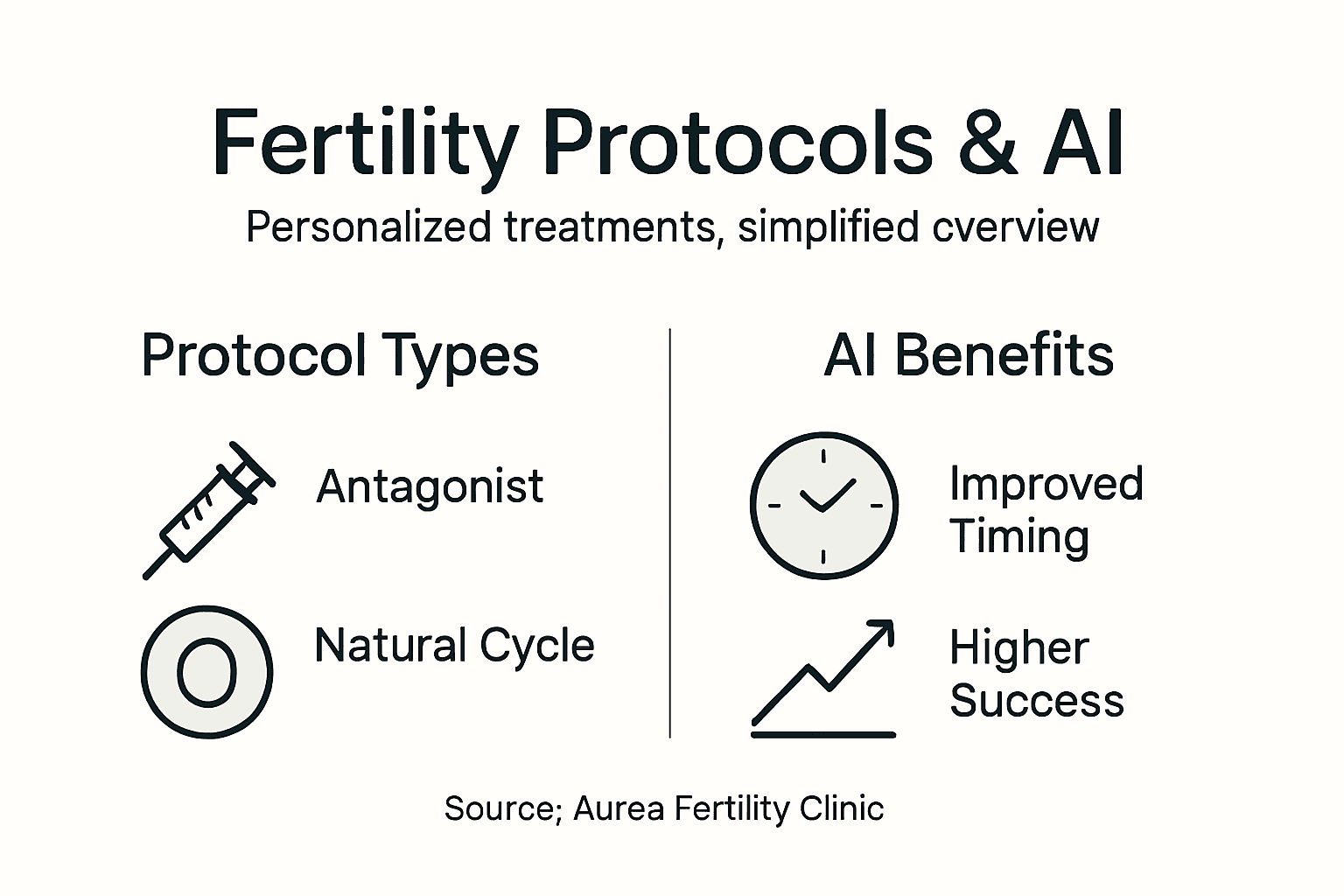
Here is a summary of key financial and clinical outcome factors for fertility treatments:
Factor | Typical IVF Protocols | Minimal/Natural Protocols |
Average Cost | $10,000-$15,000 per cycle | $5,000-$8,000 per cycle |
Success Rate | 40-55% per cycle | 15-30% per cycle |
Risk of Complication | Moderate to high (medication use) | Lower (less medication) |
Treatment Length | 4-8 weeks per cycle | 2-4 weeks per cycle |
Modern fertility protocols emphasize transparent communication about potential outcomes, enabling patients to make well-informed decisions. By presenting comprehensive data on risks, costs, and probable success rates, medical professionals empower individuals to navigate their reproductive journeys with greater confidence and realistic expectations.
Pro tip: Request a detailed breakdown of all potential costs, including indirect expenses like medication, travel, and potential additional procedures, before committing to a specific fertility treatment protocol.
Experience Personalized AI-Driven Fertility Protocols at Aurea Fertility
Understanding and customizing fertility protocols using artificial intelligence has never been more important for anyone facing the emotional and financial challenges of infertility. If you feel overwhelmed by complex treatment options, concerns about medication risks, or the frustration of lengthy timelines, modern AI-enhanced protocols offer a powerful solution. At Aurea Fertility, we specialize in integrating cutting-edge AI technology to deliver precisely tailored treatment plans that save time, reduce unnecessary tests, and improve your chances of success.
Discover how our AI-powered embryo monitoring, genetic insights, and dynamic treatment adjustments can transform your fertility journey. Whether you are exploring tailored ovarian stimulation or seeking faster outcomes with minimized physical and financial burden, our patient-centric approach supports you every step of the way. Learn more about our innovative solutions by visiting the Aurea Fertility homepage and start your personalized fertility protocol today. Do not wait to take control of your reproductive health with the best technology and care available.
Frequently Asked Questions
What is a fertility protocol?
A fertility protocol is a systematic medical roadmap used in reproductive medicine to address infertility challenges. It includes comprehensive evaluations, diagnostic testing, and tailored treatment planning based on individual patient assessments.
How does AI optimize fertility protocols?
AI optimizes fertility protocols by using predictive analytics to personalize treatment predictions, enhance embryo selection, assess risks, and adapt treatment plans dynamically based on real-time physiological data.
What are the main types of fertility protocols?
The primary fertility protocol types include Antagonist Protocol, Agonist Protocol, Natural Cycle Protocol, and Minimal Stimulation Protocol, each offering unique benefits, treatment strategies, and considerations based on a patient’s specific circumstances.
What should I discuss with my reproductive specialist before starting a fertility protocol?
You should discuss your comprehensive medical history, potential genetic screenings, treatment options specific to your needs, and the financial aspects and risks associated with the chosen fertility protocol.
Recommended


Comments